A 42,000-hectare desert in the heart of Navarre, Spain: what it is, what to see, how to get there and why it's worth exploring with a local guide who knows every corner.
There's a moment, just after you leave the last paved road, when the world goes quiet. Ahead of you there is only earth: gullies, flat-topped mesas and a lone clay spire cut out against the sky. It's hard to believe this desert sits in southern Navarre, an hour from Pamplona. But it does — and I've been exploring it for more than ten years.
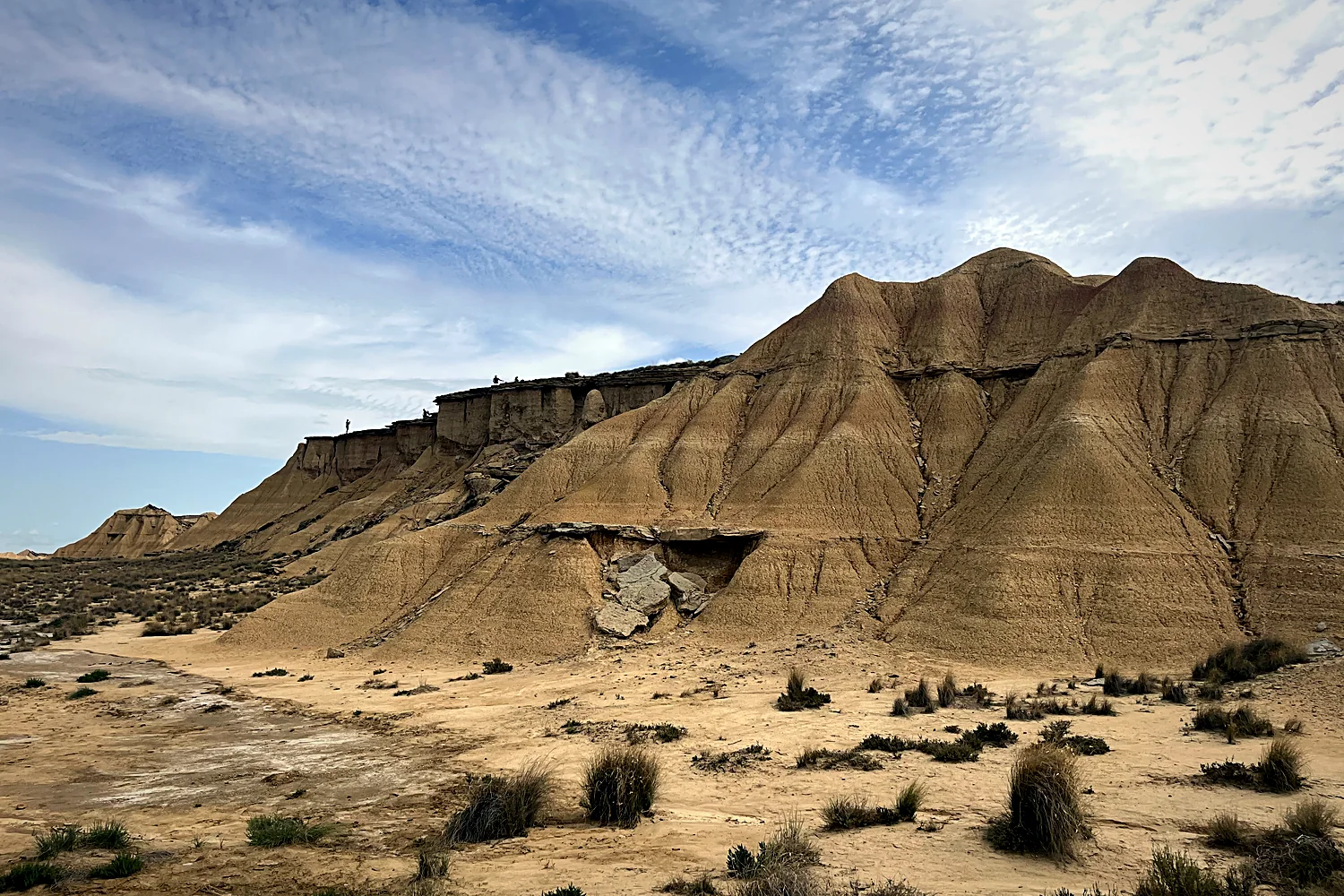
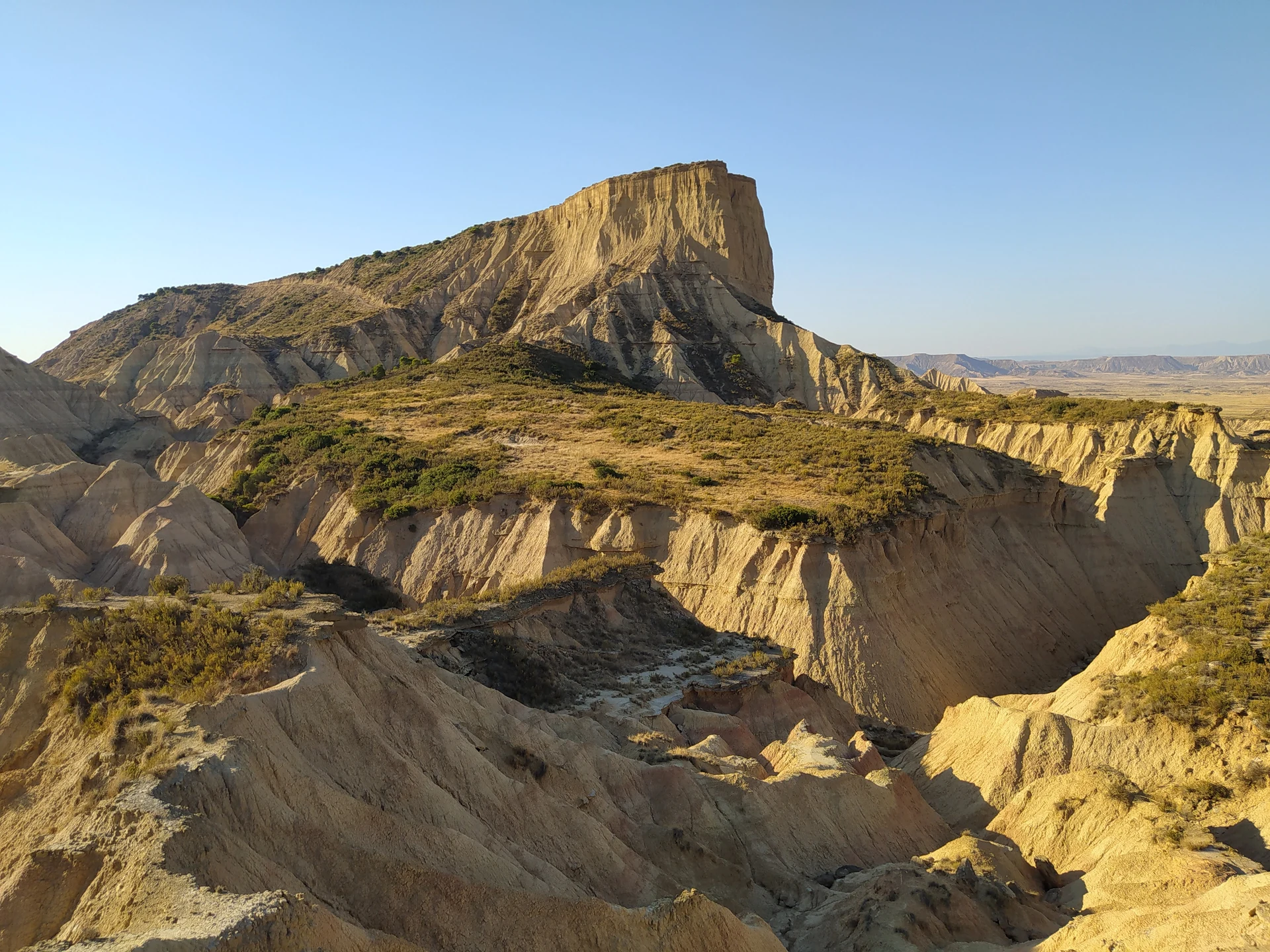
The Bardenas Reales is a 42,000-hectare semi-desert in south-east Navarre and one of the most unusual landscapes in Europe. Hardly any trees, no permanent rivers: just clay, gypsum and sandstone carved by wind and water over thousands of years into a maze of ravines, mesas and isolated rock formations. It looks like nothing you'd expect to find in northern Spain.
Millions of years ago, what you see today was the bed of a huge lake and, before that, a marine environment — fossils still turn up as a reminder that water and even crocodiles were once here. Erosion did the rest. The park has three distinct areas: the Bardena Blanca, the driest and most spectacular, home to the best-known formations; the Bardena Negra, higher and more wooded; and El Plano, the farmland area. Most of the photos you've seen of the Bardenas were taken in the Bardena Blanca.
The Bardenas Reales was declared a UNESCO Biosphere Reserve in 2000 and is also a Natural Park. That protection isn't a formality — it shapes how you visit. Sticking to authorised tracks, respecting closed areas and keeping your footprint to a minimum are all part of a good visit. This is a living landscape, with shepherds, birds of prey and a fragile geology worth understanding before you set foot in it.
“Reales” means royal. The name dates back to the Middle Ages, when this land belonged to the Crown of Navarre and was used for grazing and royal hunting. The kings granted its use to the Pyrenean valleys and the villages of the Ribera in exchange for fees, a transhumance system along the Cañada Real drove road that partly survives to this day. Knowing this history changes the way you see the landscape: it isn't an empty desert, it's a land shaped by centuries of human life.
Getting to the Bardenas is easy, but it pays to know which entrance to use and when to come. Here's the practical information to check before you set off.
The most used entrance is near Arguedas, a short drive from Tudela. From there the main track takes you straight into the heart of the Bardena Blanca and to Castildetierra. It's the easiest option for a first visit.
The northern entrance, via Carcastillo, leads to other parts of the park and is usually quieter. A good alternative if you're coming from northern Navarre or want a different route.
From the south, starting in Buñuel, you enter the Bardena Negra: the highest, most wooded and far less visited part of the park. Local roads lead to the NA-126, where a well-kept track takes you to the Corrales de Bea, the starting point for the Cabezo del Fraile — topped by the ruins of a medieval castle — and formations such as La Catedral. It's the wildest, most remote side of the park, ideal if you already know the Bardena Blanca and want to go further.
The Bardenas is just over an hour from Pamplona and less than 90 minutes from Zaragoza and Logroño. From Tudela, where our tours start, you're inside the park in a few minutes.
Spring and autumn are unbeatable: mild temperatures, clear light and rich colours. In summer, go early in the morning or late in the afternoon — the midday heat and lack of shade are tough. Winter, with its fog and stillness, offers a different and very photogenic side of the desert.
Part of the Bardenas is a Special Protection Area for birds (ZEPA in Spanish). While birds of prey are nesting — roughly February to August — some areas close so wildlife isn't disturbed. A local guide always knows what's open and adapts the route accordingly.
These are the places I show my groups. Not a list copied from a guidebook: it's what I've learned to look for after crossing the Bardenas hundreds of times, at every hour and in every season.

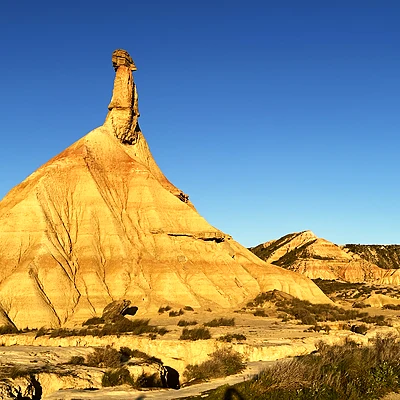
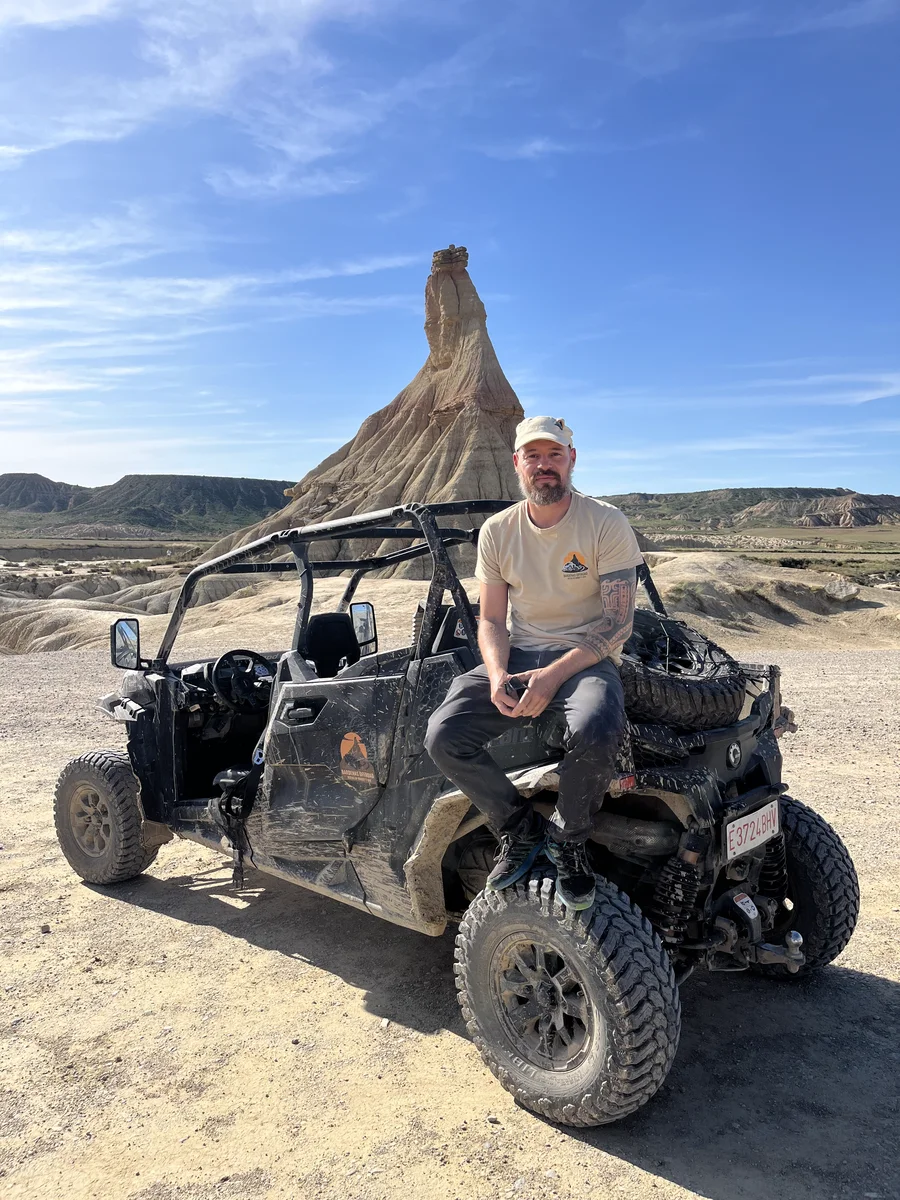
It's the image everyone associates with the Bardenas: a clay spire capped by a layer of harder rock that has protected it from erosion. But it won't last: geologists estimate it has 30 to 50 years left before it collapses. Seeing it today really means seeing it while you still can. Sunrise and sunset light transform it completely.

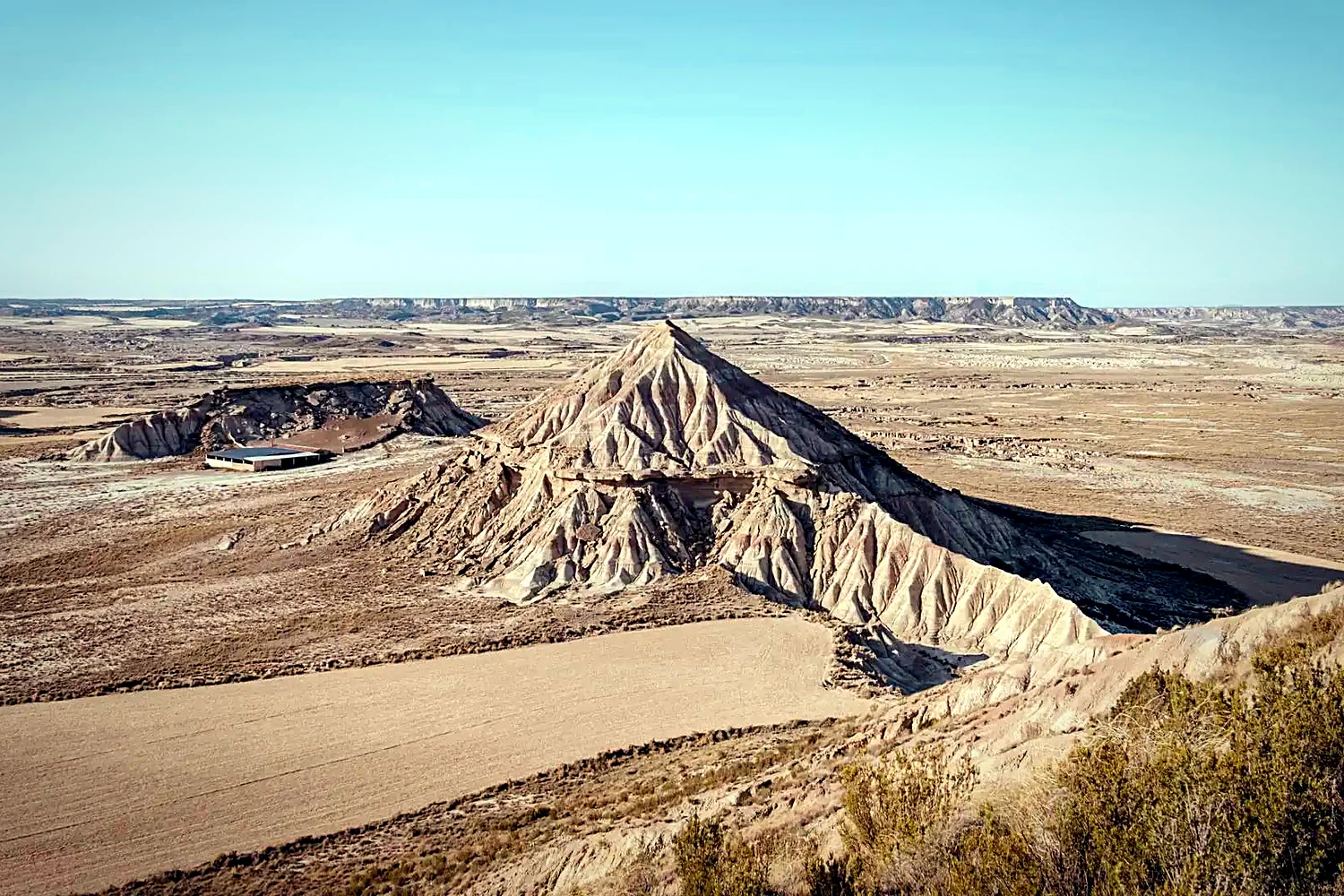
One of the finest natural viewpoints in the park: from the top, a 360° panorama opens up over the whole Bardena Blanca. The best place to grasp the true scale of the landscape.

The wildest, least visited area. This is where the Dothraki Sea from Game of Thrones was filmed in season 6. A maze of ridges and gullies where you genuinely feel you've landed on another planet.

The view that isn't in the guidebooks. It's one of those places I show my groups that you rarely see online: the reward for knowing the land from the inside.

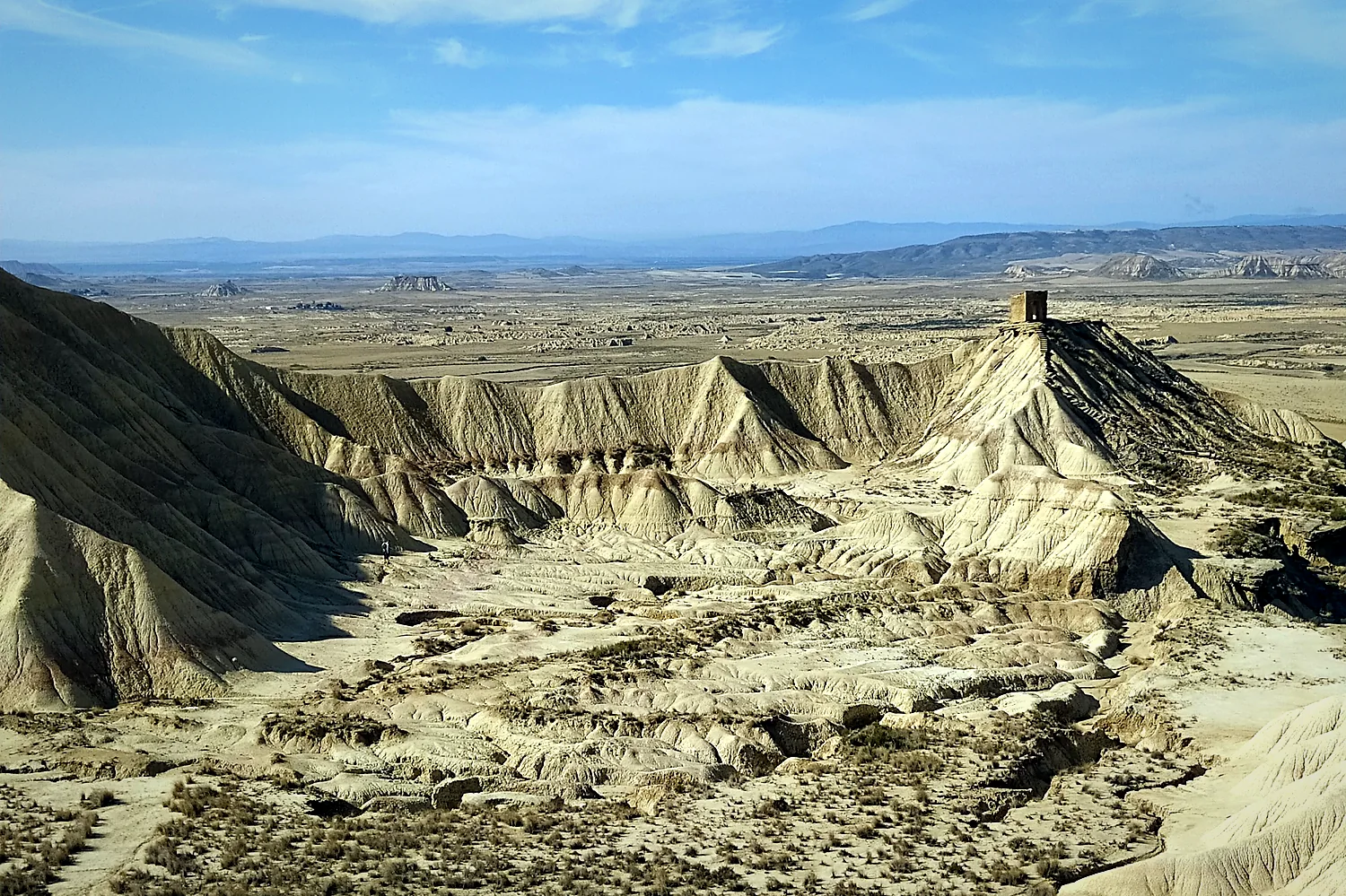
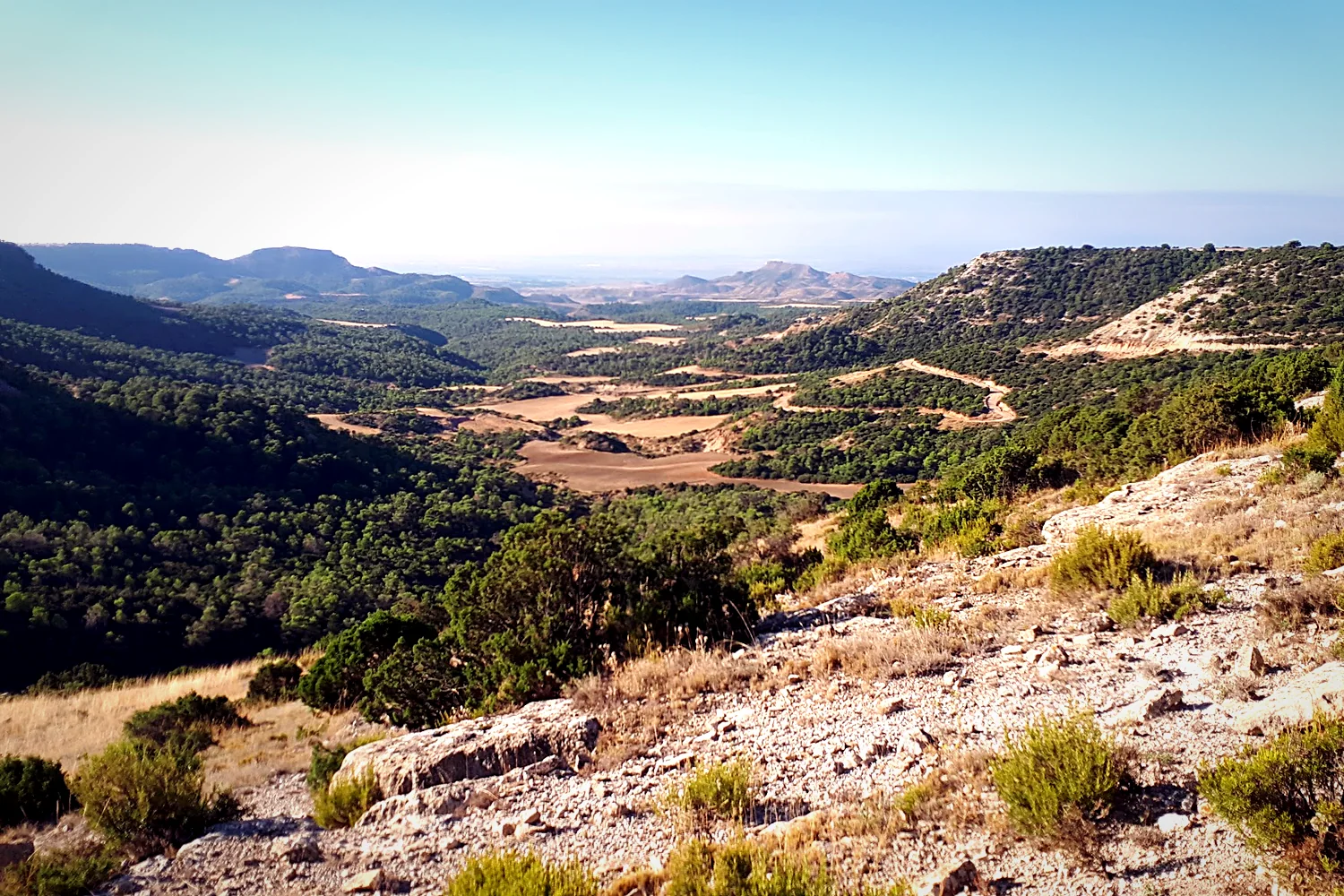
The least-known side of the park. In the south, the land is covered in Aleppo pines and scrub, and the colour shifts from arid white to the dark green that gives it its name (“negra” means black). Here stands El Fraile, a lone butte crowned by the ruins of a medieval castle. Quieter and more intimate, it's the Bardena you discover when you think you've already seen it all.
To show the Google map, we need your consent to use cookies.
Visiting the Bardenas on your own means seeing the landscape. Visiting with a local guide means context, stories, spots that aren't on Google Maps and — if you need it — the whole experience in your language. Here are the options and what each one does best.
The main track is fine for any ordinary car. You can do the main loop in 2–3 hours and see Castildetierra without any trouble. Ideal if you want complete freedom over timing, though you'll miss the stories and the less obvious spots.
FAQDriving a buggy through the desert is the most fun, immersive way to explore the Bardenas. With your local guide leading the way, no dust, no risk of getting lost and stops wherever the light is perfect. Our flagship tour.
See the Bardenas Reales buggy tour →More room and comfort, the same thrill. Perfect for larger families, groups and anyone who'd rather ride in the same vehicle as the guide, listening to the stories of the land.
See the 4x4 tour →Pedalling through the badlands with electric assistance lets you soak up the silence and get close to the landscape without overdoing it. A sustainable, all-senses way to discover the desert.
Ask us on WhatsApp →A trip designed for your group only, at your pace and in your language. Your guide tailors the route, the stops and the stories to the people on board. That's what turns a tour into a memory.
Ask us on WhatsApp →Coming from Pamplona without a car? We organise the trip so all you have to do is enjoy it. Ask us about pick-up options and times.
Ask us on WhatsApp →Yes — and I say that as a father of two who has taken them there many times. The Bardenas is great for a family day out as long as you match the activity to the children's age and pace. Here's what I keep in mind when I guide families.
From about 5–6, they love it. Guided buggy and 4x4 tours are especially comfortable for kids: they're seated and safe, no dust to swallow and no risk of getting lost, while the guide makes the explanations fun.
The 4x4 is the most relaxed option for little ones; the buggy is the most exciting for teenagers and adults. Either way, stops are short and varied to keep them hooked: a giant spire, a story about bandits, a filming location from a series they know.
Plenty of water, sunscreen, a cap and sunglasses are a must — there's very little shade. In winter, warm layers. And above all, accept they'll get a bit dirty: it's part of the adventure.
The Bardenas is an extraordinary setting for team building and corporate events. We design tailor-made off-road experiences that turn a company day into something your team will talk about for a long time.
“I don't sell activities: I share a land I've been exploring for years, in the language of the people who come with me.”
I've been guiding groups through the Bardenas Reales for more than ten years. Before that I lived in Brussels, which may be why I care so much that the experience works just as well for a traveller from the UK, France or right here. I guide in English, Spanish, Catalan and French, with no interpreter or middleman.
I'm a father of two, a corporate social responsibility consultant and deeply connected to rural life and nature. You'll notice it in the way I work: authorised tracks, small groups, minimal footprint and complete respect for a land I want to protect too.
Prefer to read in Spanish or French? Here are the other versions of this page.
Tell me what you're looking for — dates, group size, language — and I'll help you plan the best way to experience the Bardenas. I reply personally on WhatsApp within 24 hours.